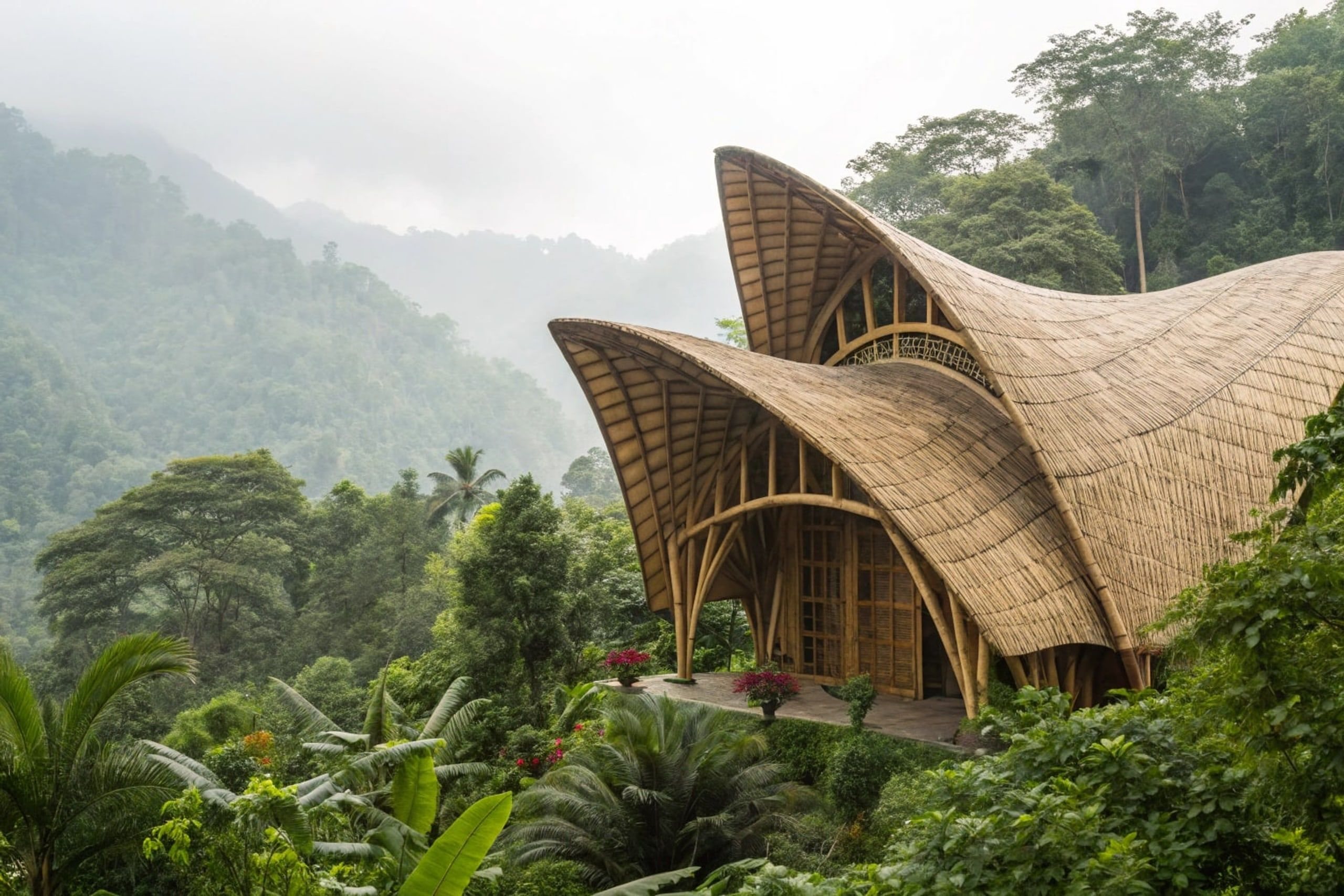
Materials
Mostly local.
Guadua angustifolia bamboo from southern Costa Rica. Hardwoods from sustainable in-country plantations. Lime, clay, and river stone for floors and walls.
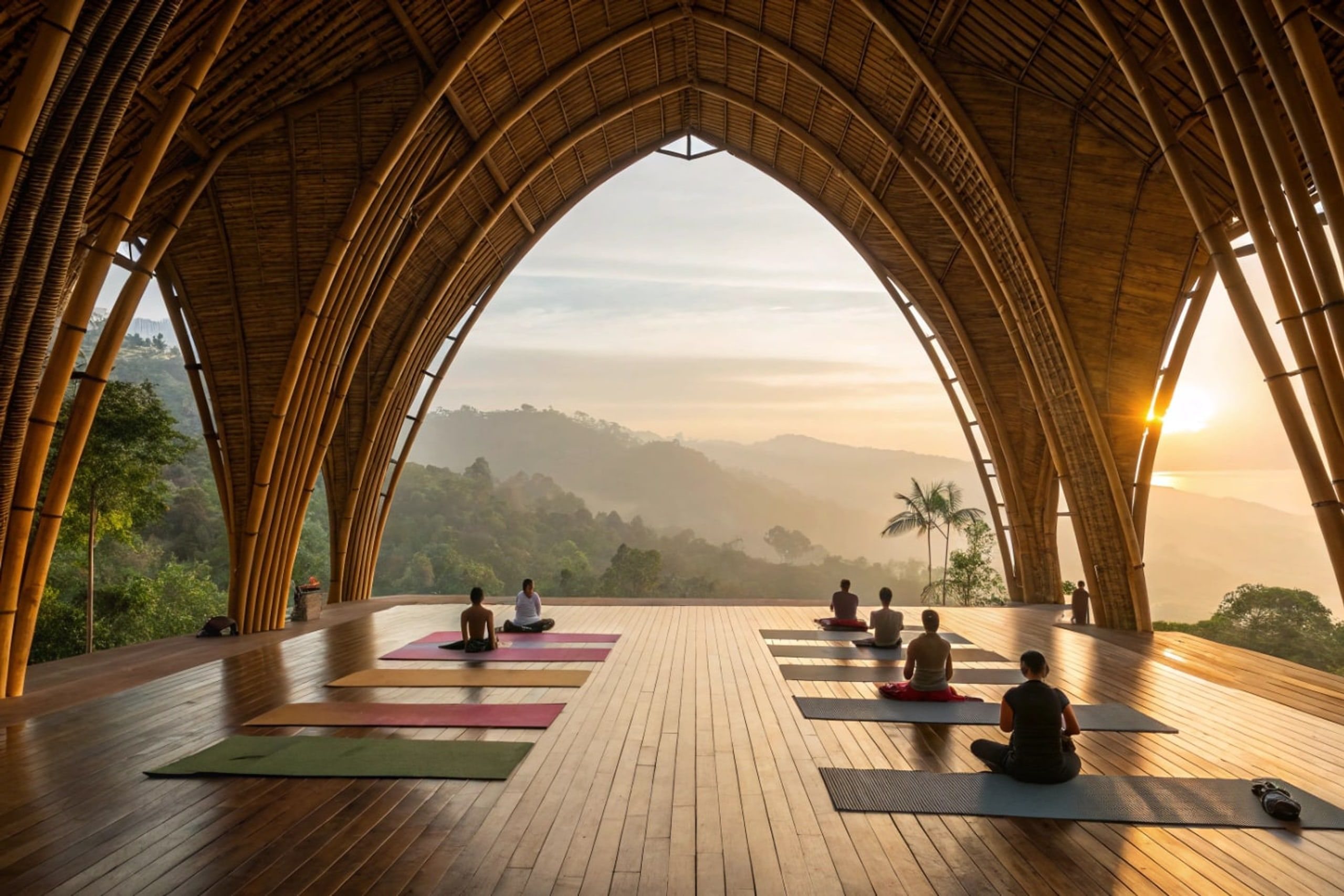
Built in bamboo.
A method out of Bali
We work with builders trained in the IBUKU method out of Bali, where this kind of bamboo construction has been refined over the last 15 years. Bamboo U is the same school. Curved roof spans, exposed joinery, lime plaster floors. Most public buildings are open on at least one side.
The drawings
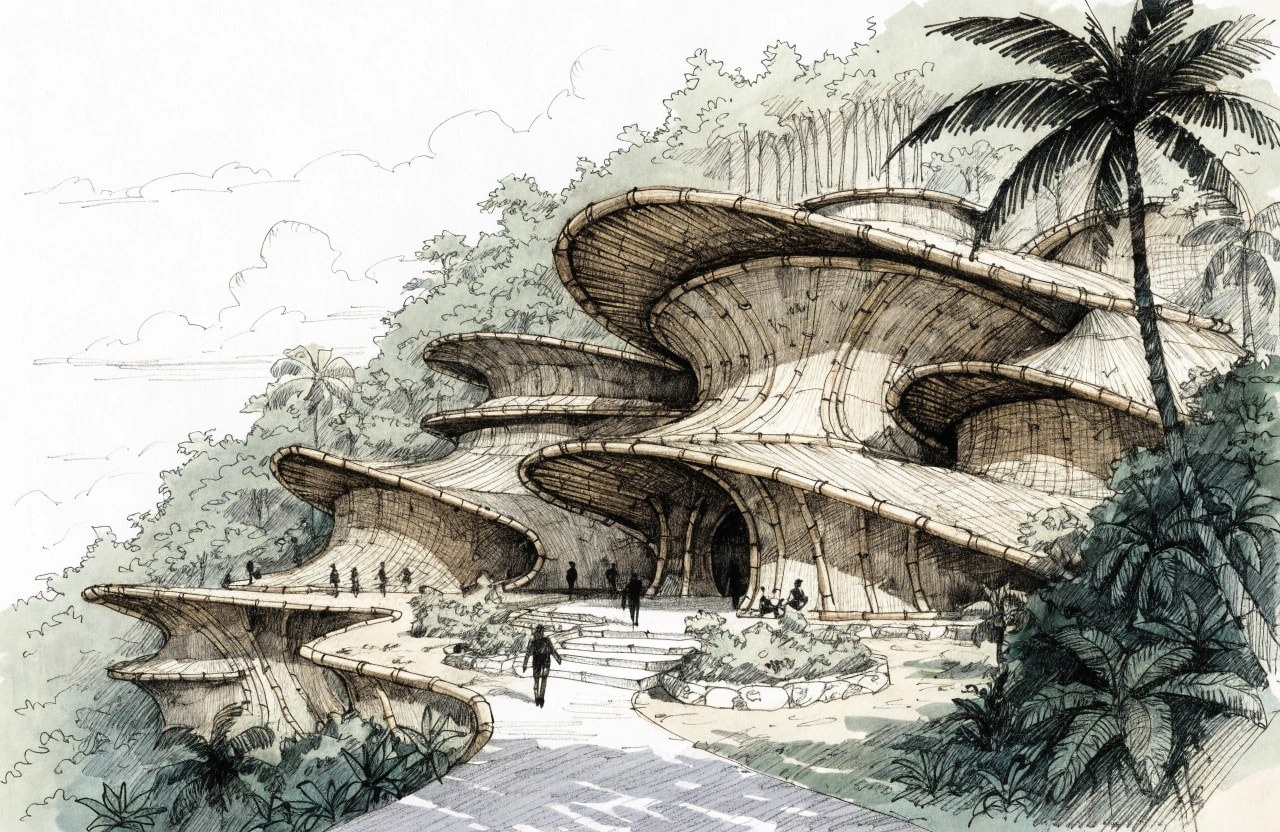
01 · Concept
Pen-and-ink perspective. The first read of the form.
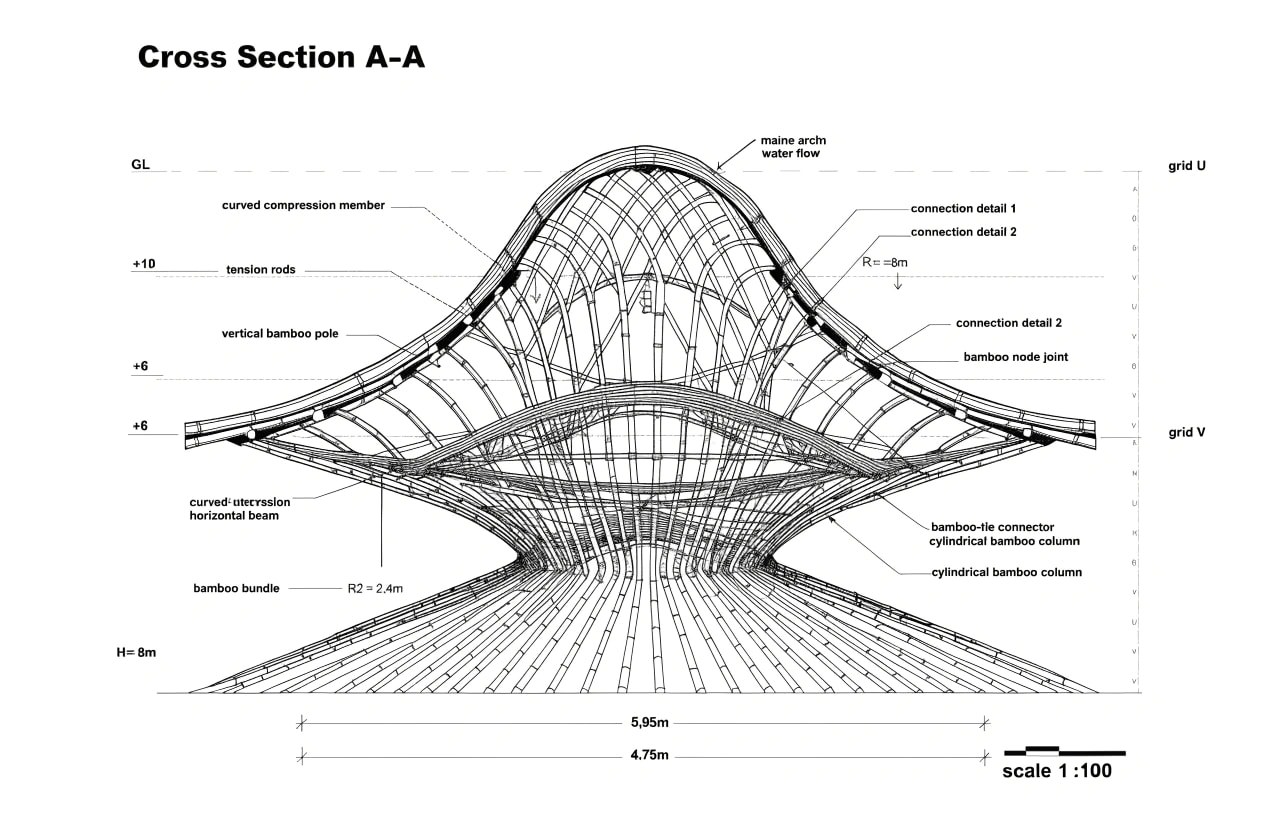
02 · Section
Cross-section A-A. Spans, joints, and tensions.
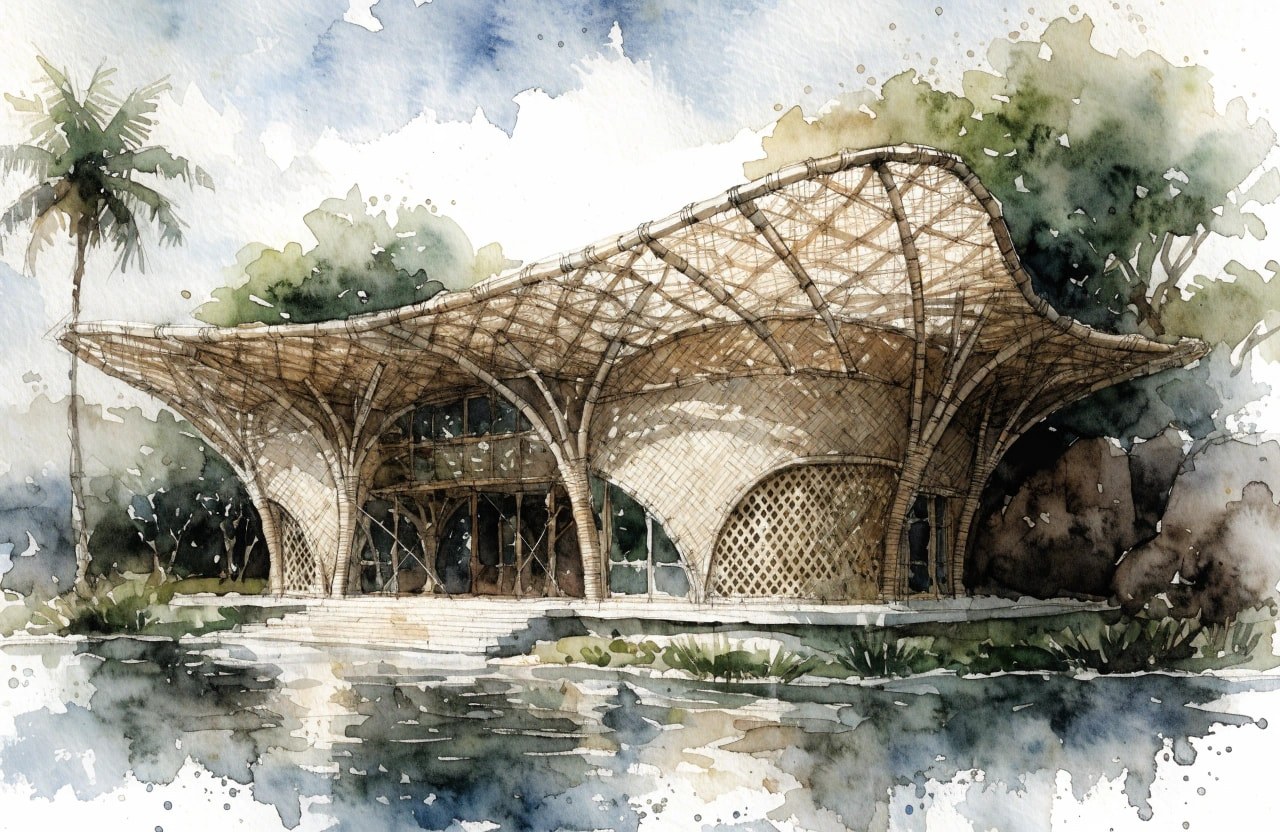
03 · Render
Watercolor study. Light, water, palms, scale.
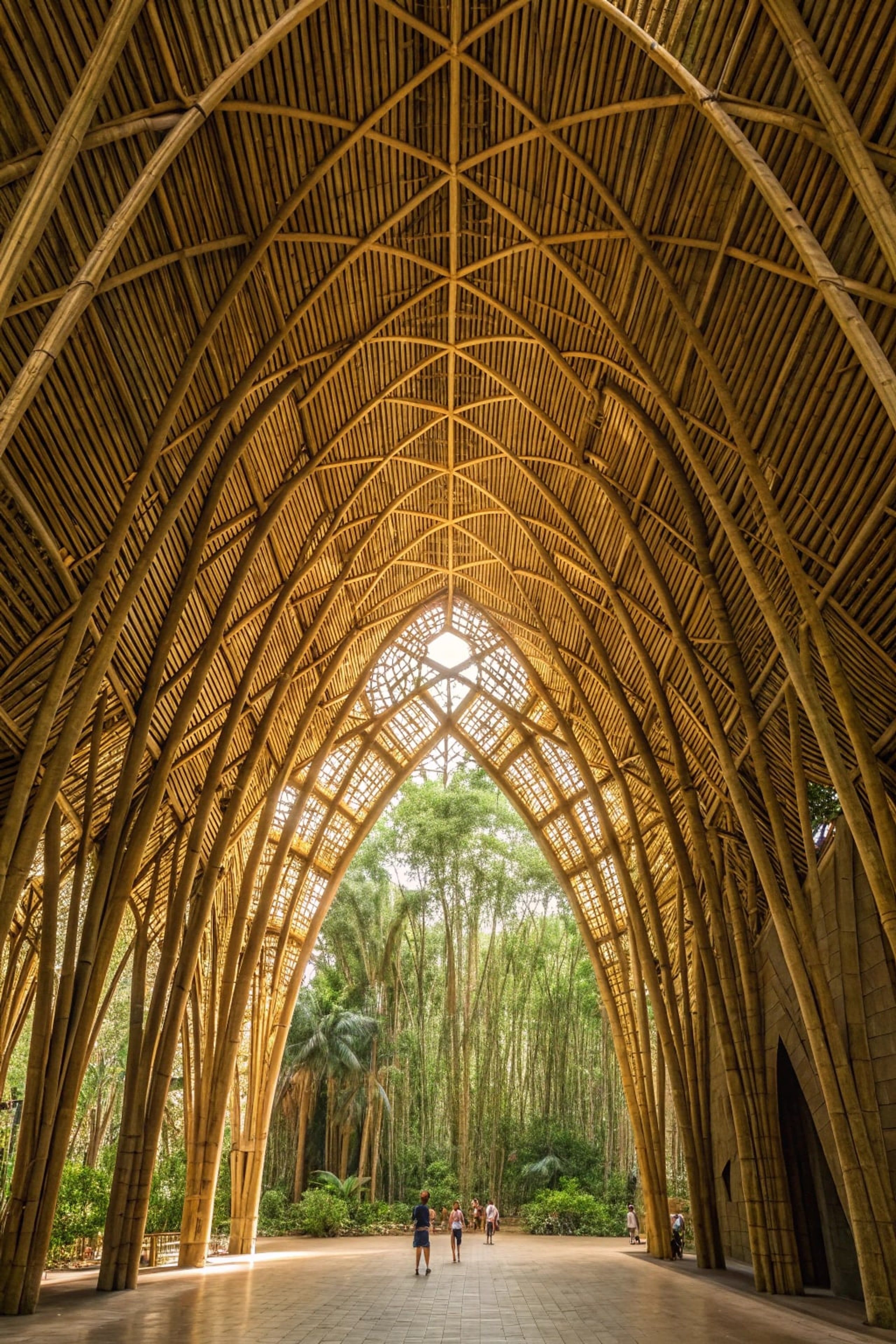
Materials
Guadua angustifolia bamboo from southern Costa Rica. Hardwoods from sustainable in-country plantations. Lime, clay, and river stone for floors and walls.
Form
Curved roof spans up to 18 metres in the main pavilion. None of the public buildings have a square plan. Cabins are simpler. Rectangular footprint, vaulted ceiling.
Air
Warm air rises out, breeze comes in low. Most rooms don't need fans. None of them need air conditioning. The pavilion has acoustic clay tile to absorb the morning yoga.